
Best and Cheapest IPTV in Sweden 2026: What Prices Mean
Best and cheapest IPTV are two different questions. How Sweden's 30-day price rule works, and the change that may remove it for subscriptions.
Looking for the best IPTV subscription in Sweden? Growth has stalled, four million subscriptions were cancelled — here is how to compare properly.
Searching for the best IPTV subscription looks simple and isn't. No subscription is best for everyone, and Swedish marketing law requires anyone claiming to be the best to prove it. What you can do is compare systematically — and autumn 2026 is an unusually good moment to redo that comparison.
The market has turned: growth has stalled, cancellations are at record levels, and the biggest services face a merger that is now frozen until at least June 2027. This guide gives you the criteria, the figures and a method, written for people living in Sweden who may not have grown up with the Swedish TV market. Information checked 2 October 2026.
An IPTV subscription delivers television over the internet instead of an aerial, cable or satellite dish. For the whole picture first, a separate guide covers how television reaches Swedish homes. The question of which is best breaks into six smaller ones:
Only one of the six is about price. That is deliberate: a cheap subscription you never open costs more than an expensive one you use every evening.
A word about the word "best". In Sweden it is governed by marknadsföringslagen, which requires claims of being best, cheapest or fastest to be substantiated. That is why serious comparisons describe who something suits rather than crowning a universal winner — and why you should be sceptical when a seller calls its own service the best without saying what it was measured against.
In practice you have to set the weights yourself. Two households with identical budgets can reasonably land on different subscriptions.
This is the backdrop that makes comparing worthwhile right now. According to Mediavision there were around eleven million paid streaming subscriptions in Sweden in the first quarter of 2026, and growth has stalled. Meanwhile the bill grows: households spent close to seven billion kronor during 2025.
According to Mediavision there were around eleven million paid streaming subscriptions in Sweden in the first quarter of 2026. During the second quarter growth disappeared for the first time in over two years, and more than four million subscriptions were cancelled across a single year — only 40 percent of active subscriptions were left untouched, as Dagens PS reported in August 2026 (in Swedish).
Meanwhile the bill keeps growing. Households spent close to seven billion kronor on streaming during 2025, against 4.5 billion in 2020, and a Swedish household now holds about three services rather than two, according to Mediavision via SVT (in Swedish).
| 2020 | 2025–2026 | |
|---|---|---|
| Streaming spend, all households | SEK 4.5bn | nearly SEK 7bn |
| Services per household | about 2 | about 3 |
| Paid subscriptions in Sweden | — | about 11 million (Q1 2026) |
| Subscriptions cancelled in a year | — | over 4 million |
The reading is not that Swedes have stopped streaming. It is that they have started choosing again — cancelling, switching, trying cheaper tiers. A comparison exists to make that deliberate rather than impulsive.
The streaming map is being redrawn at the same time. Paramount wants to merge HBO Max with Paramount+, known as SkyShowtime in Sweden, and keep the HBO brand, according to M3 in March 2026 (in Swedish). The conclusion for a comparison is that the line-up you sign up for this autumn may not be the same one next year.
The deal has approval from the US Department of Justice and the European Commission, but integration is postponed: the companies may not combine operations before 1 June 2027 while a court reviews a lawsuit from twelve states, M3 reported in July 2026 (in Swedish).
Nothing changes for you today. But the conclusion for a comparison is plain: the line-up you sign up for this autumn is not necessarily the line-up in 2028. The longer the commitment, the greater the chance of being stuck in a package whose content has moved.
Work through this list for every IPTV subscription you are considering, whoever the provider is: content, simultaneous streams, price and total cost, binding period, supported devices, how support answers, and what the terms say during an outage. The table below sets out each check.
| Criterion | What to check | Why it decides |
|---|---|---|
| Content | is what you watch weekly actually there? | everything else is theoretical |
| Simultaneous streams | how many screens at once | decides whether the household argues |
| Binding period | none, 12 or 24 months | sets the cost of a mistake |
| Monthly price | the full cost, not the promo price | promotions end |
| Payment method | traceable or not | decides your protection afterwards |
| Support | channel, language, response time | only matters when something breaks |
| Devices | does it run on your TV? | otherwise you are buying hardware too |
Weight them for your household. A family with three TVs puts simultaneous streams first; someone in a studio flat cares more about price and flexibility.
A simple way to make that concrete: give each criterion a weight from one to three, score each option from one to three, and multiply. The total isn't gospel, but it forces you to decide what matters before the price decides for you. Most people discover at that moment that they have been paying for criteria they don't care about.
Before comparing services at all, it is worth checking what your connection can carry — covered in our guide to choosing internet TV. How to read the price figure itself is in best and cheapest IPTV.
The most revealing calculation takes two minutes: list every TV and streaming service you pay for, write down each monthly cost and how many evenings you actually open it, then divide the cost by those evenings. The result is your cost per evening used.
An example: a service at SEK 99 that you open twice a month costs about SEK 50 per evening used. One at SEK 169 that you open twelve times costs just over SEK 14. The expensive service is the cheap one, measured against how you live.
The result usually surprises people. The service kept "because it's cheap" often costs most per evening used. The same method, applied to a whole Swedish TV bill, is in our guide to what TV costs.
Much of the recent growth came from cheaper tiers with advertising. SVT's headline captures the paradox: accounts get cheaper while household spending still rises — more services at a lower unit price add up to more. So check the advertising load, what the tier drops, and what it costs across a year.
Before picking an ad tier, check three things:
The logic holds for every model: the cheapest subscription is rarely the one you keep longest, and a subscription you cancel after six weeks was never cheap.
The same criteria produce different results depending on who is watching. Three profiles recur: the family where simultaneous streams dominate, the couple where content decides and sports packages get paid for twice, and the single household where flexibility beats everything else.
The family with three screens running. Simultaneous streams matter most, then children's content and stability. Price comes third, because a package that argues about screen counts creates daily friction.
The couple watching series and some sport. Content decides, and the common trap is paying for two sports packages through months when nothing is played. Short periods and the ability to pause are worth more than a discount.
The single household, or anyone here temporarily. Flexibility wins: no binding period, simple cancellation, nothing that demands new hardware. If your stay in Sweden is open-ended, an annual plan is rarely right however good the monthly price looks.
Decide which profile resembles you before comparing subscriptions. Otherwise the package with the prettiest front page always wins.
Most people choose between three ways of getting television: the operator package with everything on one bill, individual streaming services chosen separately, or a standalone IPTV service. They differ mainly in how locked in you become and how easily the setup can be changed.
| Model | Strength | Weakness |
|---|---|---|
| Operator package | one bill, box often included | binding periods, harder to change |
| Several streaming services | exactly what you want, easy to pause | prices rise, easy to lose track |
| Standalone IPTV subscription | broad line-up, your own devices, short periods | you choose and vet the provider yourself |
The operator package suits anyone who wants one invoice and no thinking. It is rarely cheapest, and this is where binding periods live, but support is usually Swedish and the box is included.
The streaming stack suits anyone who knows exactly what the household watches and will pause and resume services by season. It is the cheapest model for the disciplined and the most expensive for everyone else.
A standalone IPTV subscription suits anyone wanting a broad line-up on existing devices without a long commitment, and who accepts having to vet the provider — exactly what our guide to the company behind a service covers.
None of the models is best in itself. What decides is how much you want to administer and how much flexibility you want in return.
Because the market is moving, the exit matters as much as the entrance. According to Konsumentverket (in Swedish), a consumer contract may have a binding period of at most 24 months, and for contracts entered into from 1 May 2014 the notice period may be at most one month.
Check three things before signing:
To compare concrete offers instead, with campaign prices and total cost, the template is in our IPTV comparison guide.
Search for the best IPTV subscription and you will meet dozens of ranking pages. Most are affiliate sites paid per click, which doesn't make them worthless — but it explains why the same three services top every list. Four checks decide whether one is worth reading: date, method, drawbacks and funding.
Four quick checks: is the test dated, is the method explained, are any drawbacks mentioned at all, and can you see who runs the site? A list with no date, no method and not one objection is marketing, not testing.
We don't claim to be the best. That would be a claim we cannot substantiate, and such claims have no place in a comparison. What we can do is state exactly what is included, so you can weigh it against the criteria above.
According to our service description it includes 18,000+ live channels, 40,000+ movies and 12,000+ series, 8K / 4K Ultra HD ready with FHD where available, a TV guide (EPG) and catch-up, activation in about a minute and round-the-clock support on WhatsApp. Plans cost €15 for one month, €35 for three, €45 for six and €65 for twelve months, with 2–5 simultaneous streams depending on the plan. There is no binding period, nothing renews automatically, and every plan carries a seven-day money-back guarantee.
It needs no new hardware: it runs in standard IPTV apps on smart TVs, Android TV, Fire TV Stick, Apple TV, phones, tablets and computers. See every feature, the supported devices, or start from the home page.
What we don't claim: that any specific named channel or sport is included, that we sell any way around geographic restrictions, or that the line-up will stay the same forever. Questions before buying are answered in our frequently asked questions or through the contact page.
No subscription is best for everyone. One is best for your household, decided by content, streams, flexibility and support — not by a ranking page.
The market has turned. Eleven million subscriptions, growth gone in the second quarter of 2026 and over four million cancellations in a year mean more people are choosing again. Do it deliberately.
Lock-in costs more than usual right now. With the HBO Max and SkyShowtime merger frozen until at least June 2027, a short contract is worth more than a few kronor of discount.
Judge a subscription per evening used, not per month. That calculation shows what is actually worth keeping, and it takes two minutes to redo when the season changes.
Redo the comparison whenever something shifts: a season ends, a price rises, or a contract nears its end date. Reviewing twice a year is cheaper than finding three forgotten services on your bank statement.
To weigh our subscription against your criteria, every plan, term and price is on the plans and prices page.
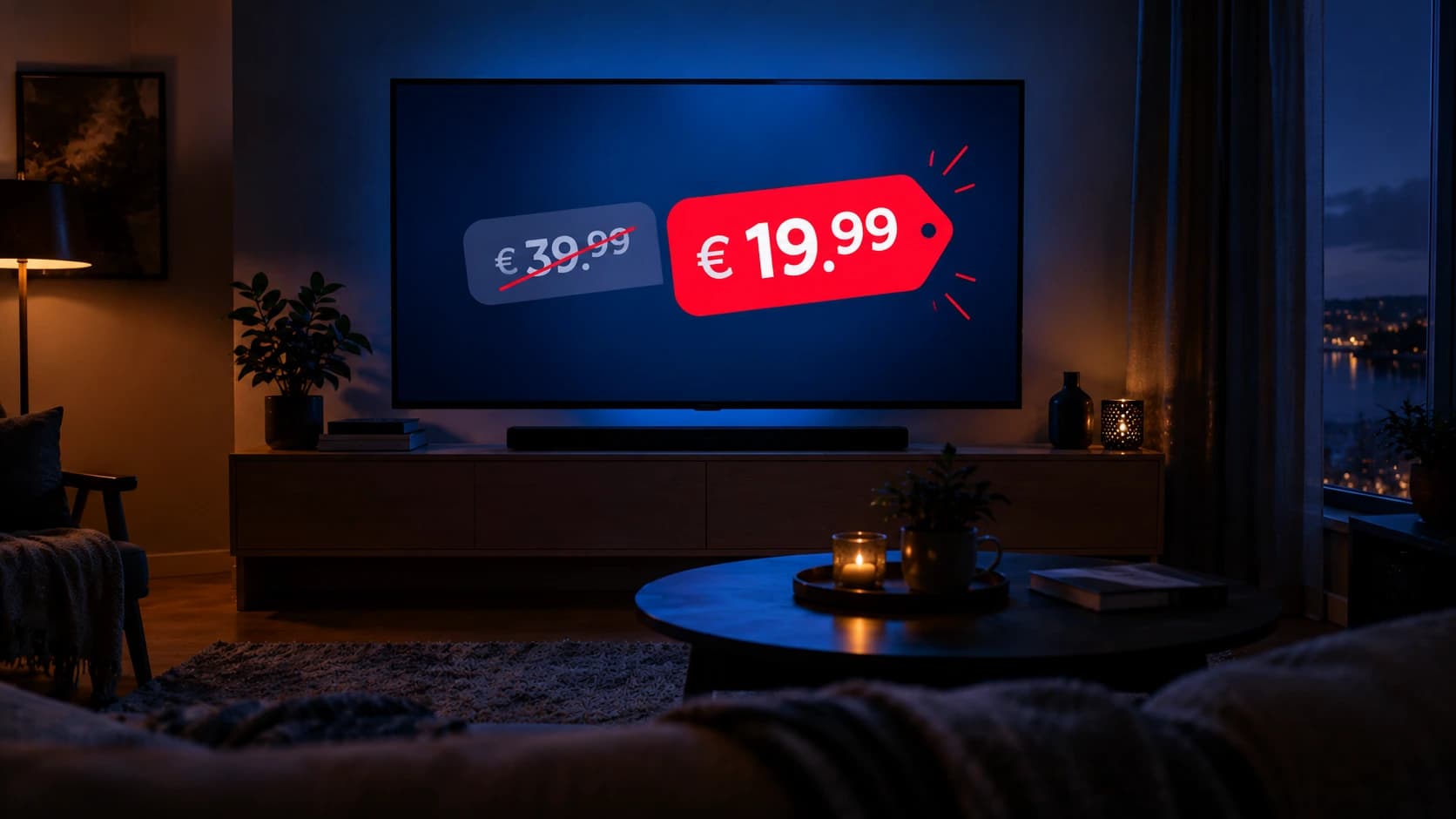
Best and cheapest IPTV are two different questions. How Sweden's 30-day price rule works, and the change that may remove it for subscriptions.
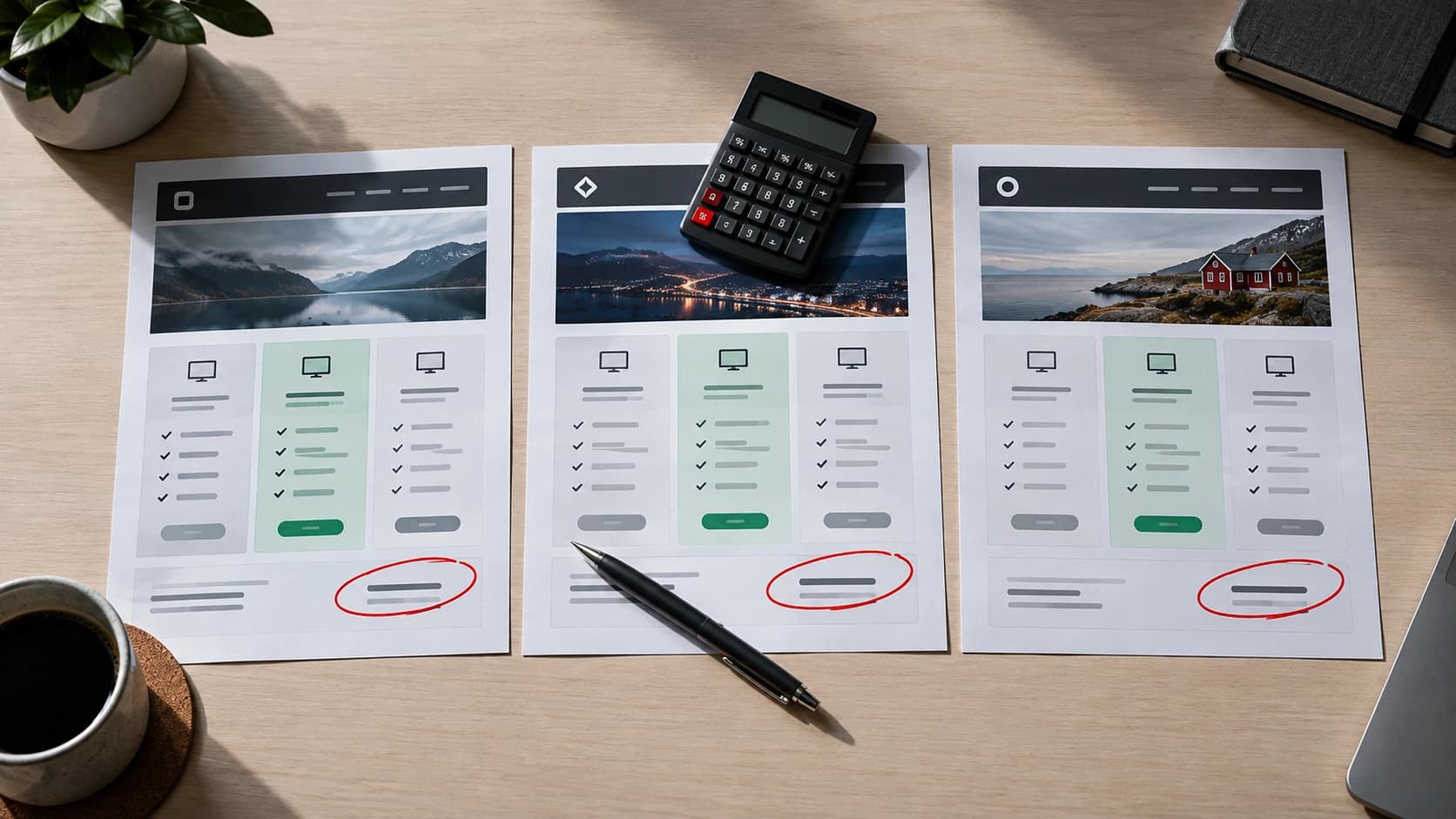
An IPTV comparison that holds up: campaign prices that doubled, a regulator order over misleading phone sales, and the template you fill in yourself.

IPTV Nordic 2026: illegal IPTV is down 27% in Sweden. What it means for expats: the public service fee, SINK, TV prices and a safe setup.